
One of the primary structural engineering issues for this relatively simple building that I found very interesting, challenging, and rewarding, was justifying Northwood's method of roof construction. Typically, rafter pairs like they use are either connected to a structural ridge beam or else connected together with a minor connection at the ridge and then tied together close to the ceiling with a "collar" tie. Either method is intended to provide structural rigidity and resistance to deflection for each rafter pair so that no horizontal thrust is imparted to the tops of the load bearing walls. Some illustrations will likely be more helpful than many more words:
 Structural Ridge beam provides vertical support at the ridge to prevent rafter rotation and the resulting horizontal thrust to the supporting walls. The ridge beam must be supported by endwalls or columns (not shown).
 In the collar tie method of framing rafters, gusset plates or metal connectors are used to hold the rafters together at the ridge while the moment resistance to thrust is provided by the collar tie acting in tension in the lower portion of the rafter.
 The stapled plywood moment plates custom-designed by Halberg Engineering for Northwood Industries is shown here as it was used in the Minnesota Bound building at the 2010 Minnesota State Fair.
In Northwood Outdoor's situation, they were looking to use their plywood gussets stapled to each side of the rafter connection at the peak as the only structural rafter connection so they could maximize interior headroom and avoid the expense and support issues of a structural ridge beam. The stapled plywood moment connection developed by Halberg Engineering allowed them to use 2x6 Machine Stress Rated rafters and the plywood gusset stapled in a specific pattern to resist the design snow loads in the Minnesota and Wisconsin areas (up to 42psf).
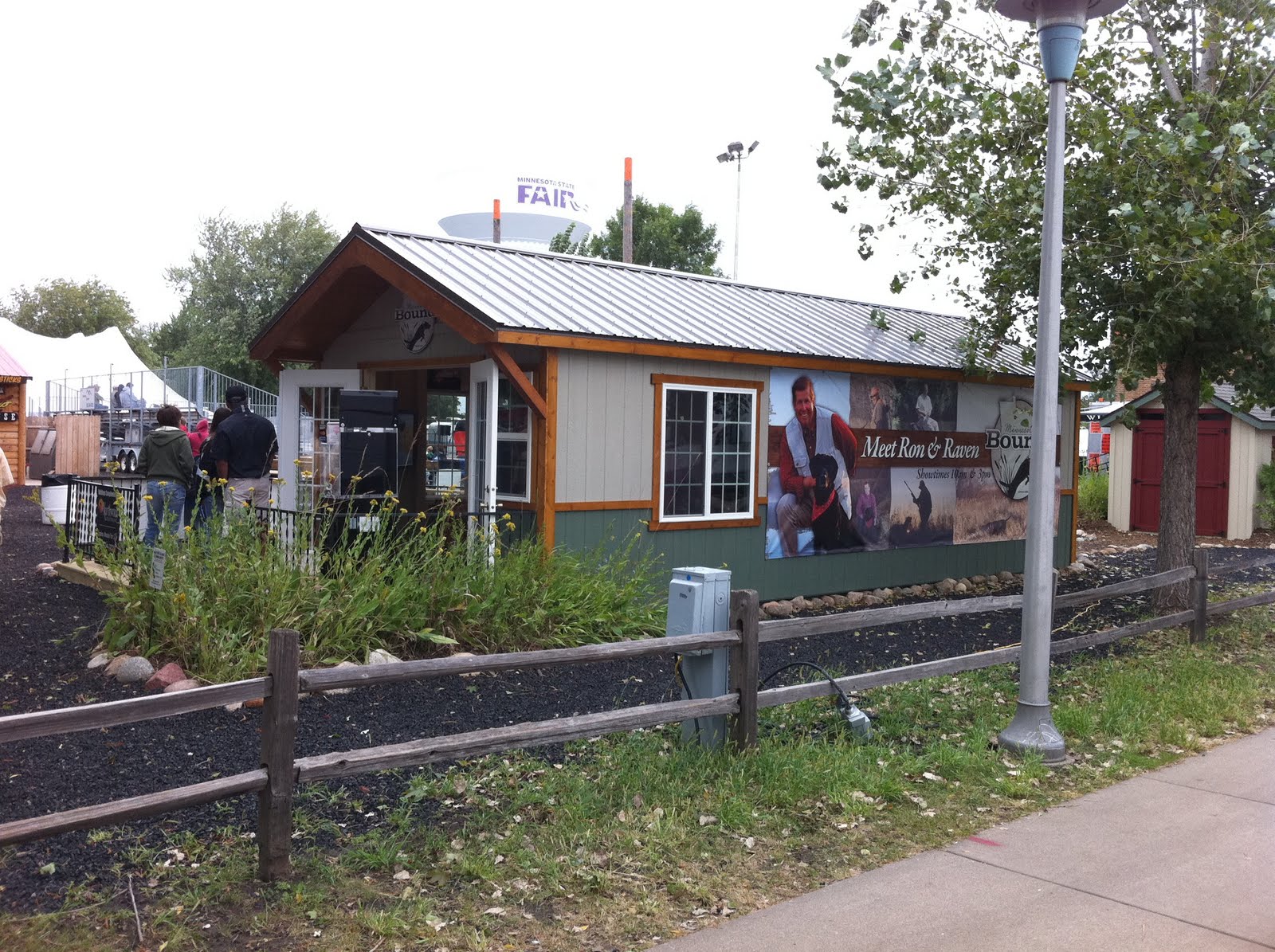

As you can see from the photos of the fair building, the rafters were left exposed, but other than myself and other construction professionals, I'm sure everyone was looking at the merchandise in this building instead of the rafters. I still get a kick out of the fact that we strive for properly designed structures to be relatively ignored by their occupants while they focus instead on the activities or contents within the building.
Please let me know if I can help you with something similar or if you have any questions.
Thanks!
Aaron Halberg, P.E.
Halberg Engineering


 Posts
Posts


